
Particulate matter (PM) is a term that refers collectively to various particles found in the air, including dust, dirt, soot, smoke, and liquid droplets. Some of these particles are large enough to be seen with the naked eye. Others are so small they can only be detected using a microscope. Particles can vary greatly in size, ranging from a diameter less than 0.1 microns (smaller than a single bacterium) to about 10 microns (1/7 of the diameter of a human hair). One micron is equal to one millionth of a meter (one thousandth of a millimeter). Fine particles are the main cause of reduced visibility (haze) in parts of the United States, including many of our treasured national parks and wilderness areas.
Particulate matter smaller than 10 micrometers in diameter is called PM10. Fine particulate matter smaller than 2.5 micrometers (or microns) in diameter is called PM2.5. To help understand this size, the diameter of a single human hair is about 50 to 70 micrometers.
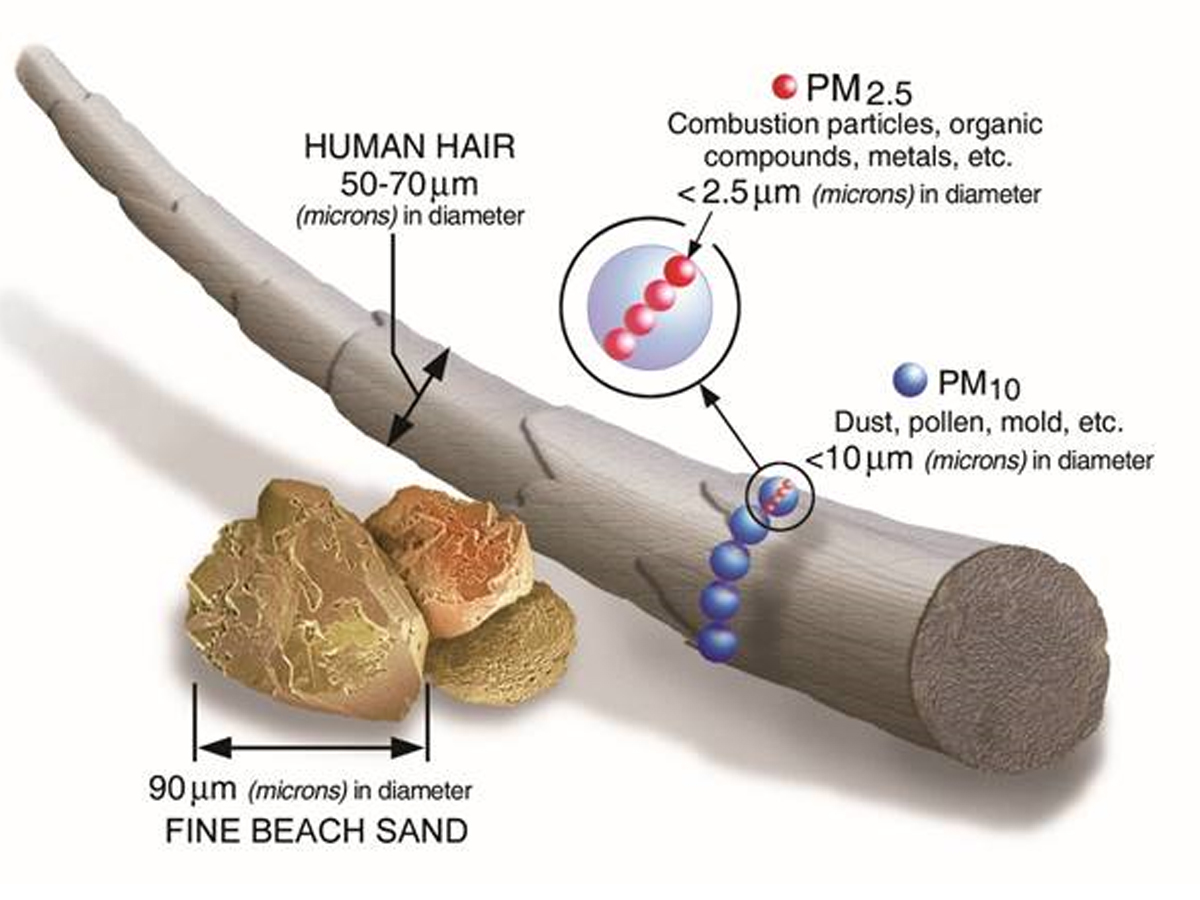
PM10 includes PM2.5 and also coarser particles between 2.5 and 10 micrometers in diameter, including airborne dust emitted into the air from industrial processes, agricultural activity, and unpaved roads. Industrial, residential and motor vehicle fuel combustion emits fine particles into the air. Fine particles also form in the atmosphere when chemical reactions in the air transform gaseous air pollutants such as sulfur dioxide, nitrogen oxides and organic compounds into microscopic solid or liquid particles.
Missouri monitors particulate matter concentrations in the air at locations across the state. Click on the Air Monitoring Sites tab to learn more about these sites. Click on the Monitoring Data tab to learn more about the data collected from this sites.
For information about other ambient air pollutants that the department monitors, visit Air Pollutants and Sources.