
Water well construction requirements protect our subsurface drinking water supplies by using sound drilling practices that prevent aquifer contamination from the surface. Owners of private water wells play an important role in ensuring long-term safety of the well and groundwater resources. After the well has been constructed, the well owner is responsible for:
- Maintaining the wellhead. This is the portion extending above the ground. State law requires the wellhead to extend at least one foot above grade. Prevent damage to the wellhead from lawn mowers, tractors and other equipment.
- Maintaining minimum setback distances from septic systems, sewers, fuel tanks, chemicals, animal feedlots, etc.
- Keeping a well house free from gasoline or chemical storage.
- Inspecting the well for cracks in the casing, a loose well cap or other problems.
- Keeping the area around the well free from debris such as leaves, weeds or trash.
- Contacting a permitted well or pump contractor, as required by law, to correct problems or perform service work.
- Plugging abandoned or unused wells. These wells can be a direct pathway for contamination to Missouri’s groundwater.
- Using the well for its intended use.
Proper well maintenance is essential to ensuring your home is supplied with high quality drinking water. More information about how to ensure you always have a safe supply of drinking water is available through the Water Systems Council's wellcare® Info Sheets webpage.
When Repairs are Needed
If repairs need to be made to the water well, hire a contractor to do the work. Search for well or pump installation contractors licensed to do business in Missouri using the department's Well Information Management System (WIMS) .
Bacteriological Testing
Testing your well for contaminants is another way to ensure you always have a safe supply of drinking water. For more information about bacteriological testing for private drinking water please contact the following agencies:
Disinfecting Your Water Well
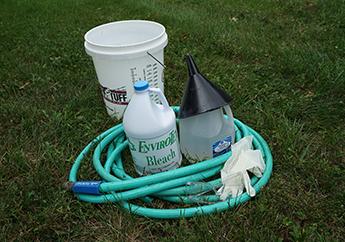
Disinfection is needed when a water sample tests positive for bacteria, the well has been impacted by flood water, or when work on the well (e.g., a pump replacement or liner installation) has been completed.
Additional Information
Natural disaster events, such as extreme flooding, may compromise even the best constructed water wells. Owners of private water wells should take precautions if the threat of flooding exists, and specific steps should be taken if water wells are impacted by flood waters.