
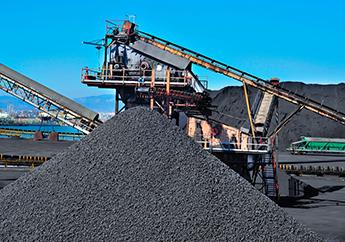
Coal is a fossil fuel formed from partially decayed organic materials such as plants, trees and other types of vegetation that accumulate on the bottom of shallow aquatic environments such as swamps, wetlands and bogs. Oxygen is depleted in these waters due to a lack of mixing and the presence of organic-rich materials. This type of environment does not allow the carbon-rich organic materials to break down (oxidize) any further. Over millions of years, layers of sediment, heat and pressure can transform these deposits into carbon-rich coal.
The first coal-fired power plant in the United States was constructed in 1882, marking the start of coal’s significant role in electricity production. Historically, coal was used for heating and cooking. It later became a foundational fuel source during the Industrial Revolution, supporting advancements in transportation, manufacturing and power generation. Coal remained the nation’s primary energy source through the early 1960s, when it was surpassed by petroleum and natural gas. In 2023, coal accounted for approximately 16% of U.S. electricity generation.
Coal in Missouri
Since the 1880’s, coal has been the primary source of electricity generation in Missouri. In 2024, Missouri ranked fourth nationally for the highest share of in-state electricity generation from coal, following West Virginia, Kentucky and Wyoming. Today, nearly 57% of Missouri’s in-state electricity is generated from coal.
Although Missouri contains an estimated 1.5% of the nation’s recoverable coal reserves, only one coal mine is currently operating in the state. Missouri’s coal deposits are not favorable for large-scale electricity generation due largely to higher sulfur content. All coal used for electricity generation in Missouri is imported from other states.
Contact Information
Division of Energy
1101 Riverside Drive
P.O. Box 176
Jefferson City, MO 65102-0176
United States