
18594 Highway KK
Boss, MO 65440-9501
United States
Permanent Hard Copy Location(s)
Location of hard copies of regulatory mechanism(s) and any modifications, reports and other supporting documents.
Missouri Department of Natural Resources, Elm Street Conference Center, Jefferson City, MO 65102 (Submit a Sunshine Law Request to review or obtain copies of the department's files.)
Public Notices
Buick Resource Recycling Facility Final Hazardous Waste Permit Appeal Period, June 23, 2026 to July 22, 2026
1 Missouri Ave.
Viburnum, MO 65566
United States
Overview
Background/ History
The Doe Run Co.-Buick Resource Recovery Facility is located at 18594 Highway KK in Boss. The operations portion of the facility currently occupies about 250 acres. From 1968 until the construction of the Buick Resource Recycling Division in 1987, St. Joseph Lead Co. and Homestake Mining Co. operated a primary lead smelter at the site. From 1987 to 1991, the primary smelter was only operated intermittently, mainly to supply sinter to Doe Run's primary smelter in Herculaneum, Missouri. Most of the equipment is still in place and operational. In 1991, St. Joseph Mining, later recognized as St. Joe Minerals Corp., converted the primary smelter into a secondary smelter, known as the Buick Resource Recycling Facility. In 1994, The Doe Run Resources Corp. was formed and continued operating the facility.
Currently Doe Run operates a secondary lead smelting plant at the site. Doe Run recycles lead-acid batteries and other lead-bearing hazardous and non-hazardous wastes to recover the lead, trace metals, sulfuric acid and polyethylene plastic. The sulfuric acid is recycled and plastics are collected for shipment off-site for recycling. The recoverable lead-bearing material is then smelted in one of three furnaces and resold as secondary lead. Because lead ore and other lead-bearing materials are often not pure lead, fluxing agents, such as limestone, are used in the smelting process to react with the impurities and carry them off as slag. Doe Run currently recycles approximately 50% of the smelter slag produced back into the secondary process. Doe Run treats the remaining slag on-site, changing it to non-hazardous waste, and then disposes of the slag on-site in a hazardous waste landfill.
Under the Resource Conservation and Recovery Act (RCRA), the facility is considered an operating commercial hazardous waste treatment, storage and disposal facility. Used or “spent” lead-acid batteries are considered a hazardous waste under RCRA because they exhibit toxic characteristics from lead and corrosivity characteristics from the sulfuric acid electrolyte in the battery. The first phase of lead-acid battery recycling, the storage and disassembly of the lead-acid batteries, is regulated under the Missouri Hazardous Waste Management Law. Doe Run currently is operating the Buick Resource Recycling Facility under a department-issued Missouri Hazardous Waste Management Facility Part 1 Permit. The recycling of the sulfuric acid and lead-bearing components of the lead-acid battery is regulated under Missouri’s Hazardous Secondary Materials rule. Doe Run is reclaiming lead and sulfuric acid under a Hazardous Secondary Materials exemption. An Agreement for Easement Notice and Covenant Running with Land, signed by the department and Doe Run in 2008, serves as notice that the site has been permitted as a hazardous waste disposal area.
Cleanup Summary
State and federal hazardous waste laws and regulations require permitted hazardous waste facilities that currently or formerly treated, stored or disposed of hazardous waste in land-based units, such as landfills, to carry out a groundwater monitoring program to detect and measure any releases to the environment from the land-based units. Doe Run currently has two groundwater monitoring programs at the Buick facility. One program is designed to monitor the landfill and the other for the remainder of the site.
According to applicable federal and state hazardous waste laws and regulations, all hazardous waste treatment, storage and disposal facilities are required to investigate and clean up releases of hazardous waste to the environment at their facility resulting from present and past hazardous waste handling practices. Doe Run is conducting corrective action activities at the site under the same hazardous waste permit the facility is operating under. Doe Run has a soil and excavation plan in place at the Buick facility to analyze excavated soil and remediate if necessary. Investigations identified several areas at the site as having the potential for impacting sediment, soil, surface water, groundwater or air. The department has requested Doe Run to perform a Corrective Measures Study to identify and evaluate possible remedial alternatives for the surface water, sediments and groundwater contamination. When the study is complete, the department and EPA will review the possible remedial measures and select the best remedy given site-specific considerations for each solid waste management unit or area of concern.
Operations
The Buick Resource Recovery Facility is located on about 250 acres at 18594 Hwy KK in Boss. In 1968, Homestake Mining Co. and American Metals Climax Inc., a wholly-owned subsidiary of Amax Lead Co. of Missouri, began operating a lead mining and primary lead smelting complex at the site. The original site, known as the Buick Mill and Mine and the Buick-Bixby Smelter, included about 320 acres. In 1986, Homestake Mining and the St. Joseph Mining Co. began a joint venture at the site. The site was operated as The Doe Run Lead Co., a wholly-owned subsidiary of the Fluor Corp. From 1987 to 1991, the primary smelter was operated intermittently, mainly to supply sinter to Doe Run's primary smelter in Herculaneum, Missouri.
In 1991, St. Joseph Mining, later recognized as St. Joe Minerals Corp., converted the primary smelter into a secondary smelter, known as the Buick Resource Recycling Facility. In 1994, The Doe Run Resources Corp. was formed and continued operating the Buick Resource Recycling Facility. Doe Run stores used (spent) lead-acid batteries and other lead-bearing hazardous and non-hazardous wastes, such as computer monitors and televisions. Doe Run then recycles these materials to recover the lead, trace metals, sulfuric acid and polyethylene plastic. The lead-acid batteries are disassembled using a battery shredder to break up the battery cases. The broken batteries are then separated into the plastic case material, ‘dirty’ sulfuric acid and lead-bearing components. Doe Run ships the plastic case material to a plastics recycler where it is further processed for manufacture into new plastic products, such as battery cases. The sulfuric acid and lead-bearing components are stored in designated storage areas until they are further processed.
Currently Doe Run makes detergent grade sodium sulfate crystals from the reclaimed ‘dirty’ sulfuric acid. Doe Run uses two furnaces to clean and smelt the battery plates and other lead-bearing material to free the elemental lead. The molten lead then goes through a drossing process and refining process. Because lead-bearing materials are often not pure lead, fluxing agents, such as limestone and ground leaded glass, are added to the molten lead to react with the remaining non-lead components of the mixture. These impurities are removed from the lead as slag. The molten lead is then poured into ingot molds and cooled. The final product, called secondary lead, is purchased by various manufacturers, re-melted and used to produce new products.
Under the Resource Conservation and Recovery Act (RCRA), the facility is considered a commercial hazardous waste treatment, storage and disposal facility. A variety of hazardous wastes are produced as part of the facility operations. These wastes included aqueous wastes, blast furnace slag, baghouse dust, corrosives, flammables, lead-bearing hazardous and non-hazardous wastes, spent solvents, spent lead acid batteries, TCLP toxic metals, and used oil, as well as D001 (ignitable), D002 (corrosive) and D008 (lead) listed hazardous wastes. Emission control dust/sludge from secondary lead smelting is also a listed hazardous waste (K069). Used or “spent” lead-acid batteries are classified as a toxic and corrosive hazardous waste. They exhibit corrosivity characteristics from the sulfuric acid electrolyte in the battery and toxic characteristics from lead. The U.S. Environmental Protection Agency (EPA) identified specific lead compounds, such as lead acetate, lead oxide, lead phosphate and tetraethyl lead, as hazardous waste because of their toxic characteristics. EPA also established a concentration limit for lead, or the amount of lead a waste can contain before it is considered a hazardous waste.
Doe Run stores the hazardous waste in tanks, containers and containment buildings. D002 and RCRA metals are stored on-site until it is sent to either the facility's off-site (Buick Mill and Mine) wastewater treatment plant for treatment or enough hazardous waste solids are collected to ship off site for disposal. Doe Run stores and treats lead-bearing slag and other lead-bearing waste. Doe Run currently recycles about 50% of its smelter slag, which contains 3% to 5% lead, back into the smelting process. Originally, Doe Run treated the smelter slag to the point it was no longer considered hazardous and shipped the non-hazardous slag off facility property to a sanitary landfill.
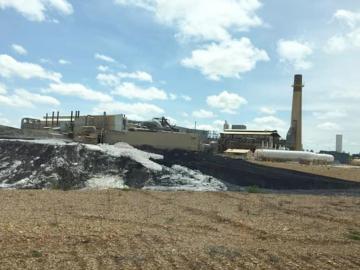
In 2008, Doe Run built an on-site hazardous waste landfill to dispose of treated smelter slag. The landfill was designed for phased construction and use, meaning as one area or 'cell' is being used, the next cell is built. When the cell being used reaches full capacity, it is capped and operations move to the new cell. The landfill was originally permitted for six cells, for a total maximum capacity of 507,000 cubic yards. In December 2018, the department approved a seventh cell, increasing the overall storage capacity by approximately 146,000 cubic yards to about 650,000 cubic yards. In June 2026, the department conditionally approved an eighth cell, allowing a total maximum capacity of 1.2 million cubic yards. By keeping the slag on-site, Doe Run eliminated about 98% of the waste leaving the facility. If processing technology advances, Doe Run will be able to smelt the material again to remove additional lead. Doe Run may also ship the hazardous waste off site for treatment and disposal at an out-of-state permitted RCRA Treatment, Storage and Disposal Facility.
In addition to the on-site hazardous waste landfill, Doe Run currently operates four hazardous waste container storage areas, with a combined maximum capacity of 2,703 gallons; six hazardous waste containment buildings, with a combined storage capacity of 34,116 cubic yards; and six miscellaneous hazardous waste treatment units, with a combined capacity of 6,257 short tons per day. The original site included a sinter plant, blast furnace, lead refining operation, acid plant, wastewater collection and treatment facilities (settlement ponds), discarded mine tailings piles, wooded areas and Crooked Creek.
Closure & Cleanup
After a facility stops operating in an area on its property, that area goes through a closure period. During closure, the facility owners and operators put final covers or caps on landfills and remove and clean their equipment, structures and soil. According to applicable state and federal hazardous waste laws and regulations, all hazardous waste treatment, storage and disposal facilities are also required to investigate and clean up releases of hazardous waste to the environment at their facility resulting from present and past hazardous waste handling practices. Closure and corrective action investigations and remediation activities can occur at the same time.
State and federal hazardous waste laws and regulations require facilities that currently or formerly treated, stored or disposed of hazardous waste in land-based units such as landfills, surface impoundments, land treatment units and some waste piles, to carry out a groundwater monitoring program to detect and measure any releases to the environment from the land-based units. Over time, water and other liquids seep into the landfill, react with the waste, and absorb different contaminants as it moves through the land disposal unit. This liquid, refered to as leachate, could contain contaminants in an amount that may be harmful to human health or the environment if released into the groundwater. In August 1991, BARR Engineering Co. installed a groundwater monitoring system, on behalf of Doe Run, to comply with the groundwater monitoring requirements. Doe Run currently has two groundwater monitoring programs at the facility. One program is designed to monitor the landfill and the other monitors the remainder of the site.
Doe Run submitted a closure plan to the department in March 2025, for the container storage and containment buildings, miscellaneous treatment units and the Slag Storage Area Landfill cells. The closure plan was included in the approved permit application and incorporated into Doe Run's current Part 1 Permit. As part of the post-closure care, Doe Run is required to monitor and maintain the closed landfill cells to prevent a hazardous waste release.
There are 25 known historical hazardous waste releases at the facility. In 1989, BARR Engineering performed a Resource Conservation and Recovery Act (RCRA) Facility Assessment for the facility property, on behalf of Doe Run. The assessment was conducted to identify and gather information on actual and potential hazardous waste releases to the environment. The September 1989 RCRA Facility Assessment Report identified 38 solid waste management units and areas of concern that were recommended for additional investigation.
In response to the assessment, BARR performed a RCRA Facility Investigation to determine if a release actually occurred and, if so, determine the type and amount of waste released, where the waste is located (horizontal and vertical extent of contamination) and how fast the waste is moving (rate of migration). On behalf of Doe Run, BARR submitted a RCRA Facility Investigation Report to the department and EPA in March 1994, with revisions and supplemental information submitted in September 1999. The sample results showed surface water and sediments in both east and west forks of Crooked Creek, as well as the groundwater beneath the facility, are contaminated with RCRA metals associated with facility operations. Based on these results, the investigation concluded that several of the solid waste management units and areas of concern required additional investigation and cleanup, also referred to as corrective action or remediation.
At the department’s request, BARR performed interim measures at the facility property in order to reduce or prevent unacceptable risks to human health and the environment. An interim measure is an action taken to temporarily control the contamination source or path the contamination could take from the source to humans, animals or the environment, such as air, soil, water and food. As an interim measure, BARR excavated solid waste management units 7, 8, 9, 12, 17, 32, 39 and area of concern B; constructed a stormwater collection tank; capped solid waste management unit 12, and constructed a containment barrier on Impoundment C. Doe Run has a soil and excavation plan in place at the Buick facility to analyze excavated soil and remediate if necessary.
In 2008, the department and Doe Run executed an Environmental Covenant for the hazardous waste disposal area. The Environmental Covenant was filed with the Iron County Recorder of Deeds on Nov. 26, 2008. An Environmental Covenant is a clause listed in the property chain-of-title that notifies, in perpetuity, any potential buyer of the environmental conditions of the property. Covenants also place certain activity and use limitations on the property.
At the department’s request, BARR will perform a Corrective Measures Study to identify and evaluate possible remedial alternatives for the surface water, sediments and groundwater contamination. When the study is complete, the department and EPA will review the possible remedial measures and select the best remedy given site-specific considerations for each solid waste management unit or area of concern.
Oversight
When the U.S. Environmental Protection Agency (EPA) implemented the federal hazardous waste laws under the Resource Conservation and Recovery Act (RCRA) in 1980, all existing facilities that treated, stored or disposed hazardous waste in a way that would require a hazardous waste permit were required to notify EPA and apply for the permit or close those operations. Because of the large number of existing facilities, Congress set up requirements, 40 C.F.R. Part 265, that allowed these facilities to operate temporarily under 'interim status' until it received its permit. Doe Run submitted its RCRA Part A Permit Application on Feb. 6, 1989, and RCRA Part B Permit Application on Feb. 23, 1989. Doe Run was issued a hazardous waste permit in August 1989.
Doe Run currently is operating and conducting corrective action investigations and remediation activities at the site under a department-issued Missouri Hazardous Waste Management Facility Part 1 Permit, effective June 23, 2026. The Part 1 Permit was originally issued in 1989, with an EPA-issued Hazardous and Solid Waste Amendments Part 2 Permit. The Part 2 Permit contained federal requirements administered by EPA that Missouri had either not adopted or had adopted but EPA had not yet given Missouri temporary or final authorization to administer. Both permits were reissued in 2005. In 2026, EPA decided not to reissue the Part 2 Permit, since EPA has no site-specific conditions for the facility, beyond those contained in the Part 1 Permit, and Missouri is fully authorized for all permitting and corrective action activities at the facility.
The Part I Permit allows Doe Run to store hazardous wastes in containers and containment buildings, treat hazardous waste in miscellaneous treatment units and dispose of its treated slag in an on-site hazardous waste landfill. The permits also require corrective action in the event there is a new release of hazardous waste to the environment or if the contaminated groundwater poses a threat due to further migration. The regulated units under the current permit consist of four hazardous waste container storage areas, six hazardous waste containment buildings, six miscellaneous hazardous waste treatment units and one on-site hazardous waste landfill.
The first phase of lead-acid battery recycling, storing and disassembling the lead-acid batteries, is regulated under the Missouri Hazardous Waste Management Law. The recycling of the sulfuric acid and lead-bearing components of the lead-acid battery is operating under a Secondary Hazardous Materials Exemption.
Documents
Listed below are the currently effective regulatory mechanism(s) and any modifications, institutional controls and any supporting documents regarding this property that the department currently has available in electronic form. The department realizes some of the electronic files can be quite large, which may result in long download times for individuals with slow internet connections. If you have any problems accessing these documents, please contact the department’s Waste Management Program by telephone at 573-751-5401 or 800-361-4827, or by email at wmp@dnr.mo.gov.
You can review printed copies of all regulatory agreements, reports and other supporting documents at the department’s Elm Street Conference Center in Jefferson City, Missouri. To review or obtain copies of the department’s files, please submit an Open Records/ Sunshine Law Request.
Regulatory Agreement
| Regulatory Agreements | Regulatory Agreement Note |
|---|---|
|
Effective Date: Expiration Date: No Part II |
| Other File(s) | Other File Date |
|---|---|
| Executed Restrictive Covenant |